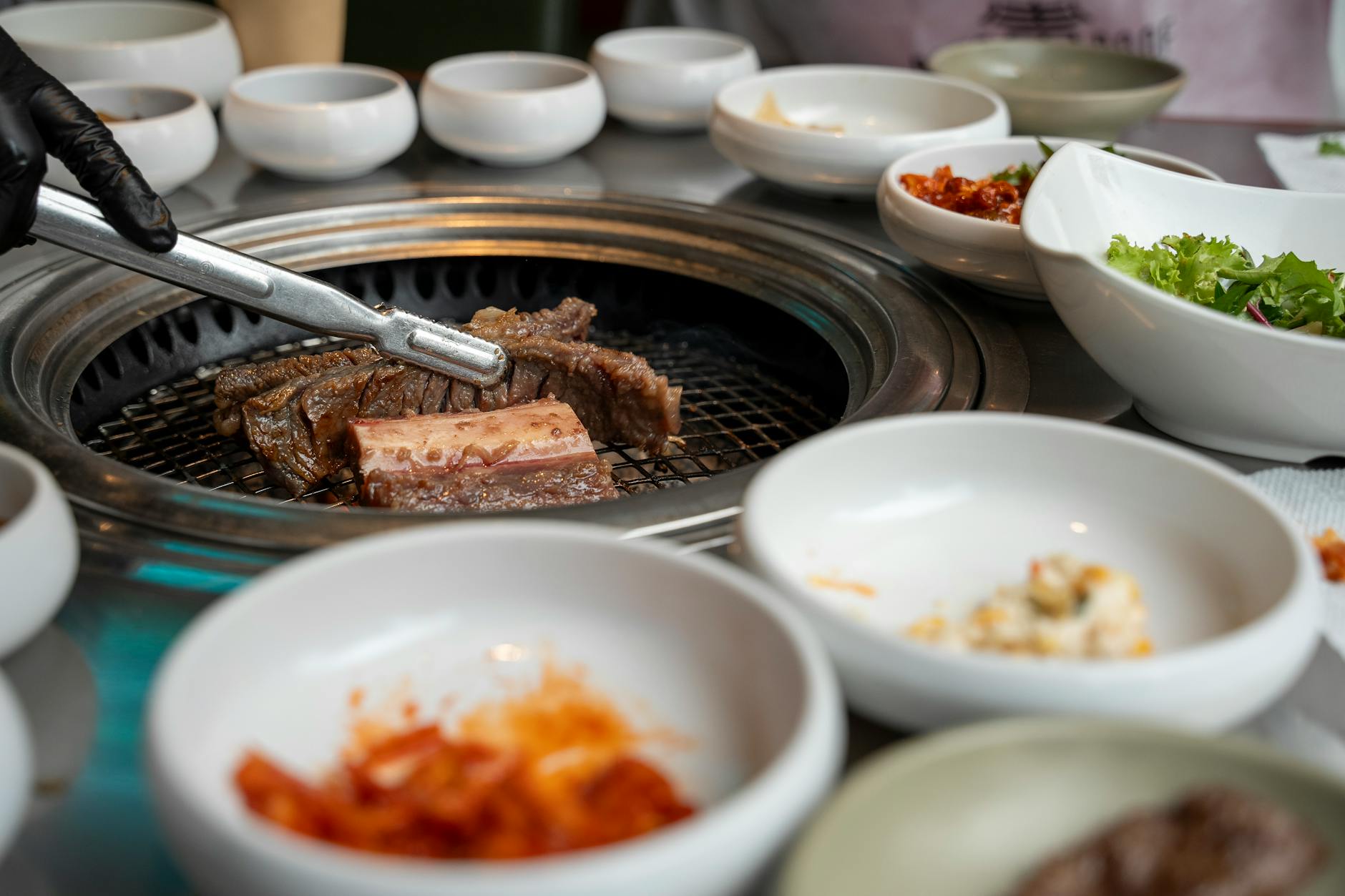
Why Korean BBQ is a Must-Experience When Traveling to Seoul in 2026
Korean BBQ, known locally as ‘gogi-gui’ (고기구이), represents one of the most iconic dining experiences you’ll encounter during your Seoul travel adventure. This comprehensive Korean BBQ travel guide will transform you from a confused first-timer into a confident diner who knows exactly how to navigate Seoul’s legendary BBQ restaurants in 2026. Whether you’re planning your first Korea trip or returning to explore Seoul’s culinary scene deeper, mastering Korean BBQ etiquette and ordering techniques will elevate your entire travel experience. With over 20,000 Korean BBQ restaurants in Seoul alone, understanding the fundamentals before you arrive will save you money, help you avoid cultural missteps, and ensure you taste the absolute best cuts of meat the city has to offer.
5 Types of Korean BBQ Restaurants You’ll Find in Seoul
Before diving into how to eat Korean BBQ, understanding the different restaurant types will help you choose the right venue for your Seoul itinerary. Each style offers unique experiences and price points suitable for different travel budgets.
- Samgyeopsal (삼겹살) Restaurants: Specialize in pork belly, the most popular and affordable Korean BBQ option. Expect to pay 12,000-18,000 KRW ($9-14 USD) per person. Found everywhere in neighborhoods like Hongdae, Itaewon, and Gangnam.
- Premium Beef (Hanwoo) Restaurants: Serve Korea’s prized native beef cattle, comparable to Wagyu. Budget 50,000-100,000 KRW ($38-76 USD) per person. Try Majang Meat Market area for best value.
- Gopchang (곱창) Specialty Shops: Focus on grilled intestines and offal. Not for beginners, but adventurous eaters should budget 15,000-25,000 KRW ($11-19 USD) per person. Concentrated in areas like Sinsa-dong and Mapo-gu.
- All-You-Can-Eat (Buffet) Chains: Unlimited meat for 13,000-22,000 KRW ($10-17 USD) per person for 90-120 minutes. Chains like ‘Galmegi Brewing’ offer unlimited pork belly plus draft beer.
- Charcoal BBQ (Sut-Bulgogi) Restaurants: Use traditional charcoal instead of gas grills, providing authentic smoky flavor. Slightly pricier at 20,000-35,000 KRW ($15-27 USD) per person but worth it for the experience.
Best Korean BBQ Neighborhoods in Seoul: Where to Go in 2026
Location matters tremendously when choosing your Korean BBQ experience in Seoul. Each neighborhood offers different atmospheres, price points, and specialties that cater to various traveler preferences.
Hongdae (Hongik University area) remains the top choice for budget travelers and younger crowds, with hundreds of BBQ spots offering competitive prices and late-night hours (many open until 2-4 AM). Take Seoul Metro Line 2 to Hongik University Station and explore the side streets. Mapo-gu district, particularly around Mangwon Market, offers incredible local restaurants where you’ll be the only foreigner—prices run 20-30% cheaper than tourist areas. For premium experiences, head to Gangnam’s Cheongdam-dong or Apgujeong neighborhoods where you’ll find high-end Hanwoo beef restaurants with impeccable service. Itaewon serves international travelers with English-speaking staff and fusion-style Korean BBQ options, though prices run slightly higher. Majang Meat Market near Majang Station (Line 2/5) lets you buy premium cuts wholesale then grill them at attached restaurants for minimal fees (usually 3,000-5,000 KRW/$2-4 USD per person for grilling service).
Step-by-Step Guide: How to Order Korean BBQ Like a Local

Ordering Korean BBQ intimidates many first-time travelers to Seoul, but following this systematic approach will make you look like a seasoned pro, even on your first visit.
- Step 1 – Choose Your Meat: Start with samgyeopsal (pork belly) or dwaeji-galbi (pork ribs) for your first experience. Order in portions called ‘inbun’ (인분), typically 150-200g per serving. Minimum order is usually 2 servings.
- Step 2 – Specify Thickness: For pork belly, you can request ‘two-gyup’ (두겹/thin) or ‘sam-gyup’ (삼겹/thick). Thin cooks faster and crisps better; thick stays juicier.
- Step 3 – Add Additional Orders: After your initial order, you can add more meat, usually in single servings. Also order ‘naengmyeon’ (cold noodles) or ‘dwenjang-jjigae’ (soybean stew) to finish the meal.
- Step 4 – Request Extras: Ask for ‘sangchu’ (lettuce) and ‘kkaennip’ (perilla leaves) if not provided—these are usually free refills. You can also request ‘maaneul’ (garlic) and ‘gochu’ (peppers) to grill.
- Step 5 – Drinks: Soju (소주) is the traditional pairing at 4,000-5,000 KRW ($3-4 USD) per bottle. Beer (‘maekju’) costs 4,500-6,000 KRW ($3.50-5 USD). Mix them for ‘somaek’ (soju + beer cocktail).
The Complete Korean BBQ Grilling Technique Guide for 2026 Travelers
Many Seoul Korean BBQ restaurants have staff who will grill for you, but knowing proper technique ensures you get perfectly cooked meat when dining at casual spots where self-grilling is expected.
First, understand that the grill center is hottest—place meat there initially, then move to edges to finish cooking without burning. For samgyeopsal (pork belly), place the fatty side down first, allowing the fat to render and create natural oils that prevent sticking. Use the provided scissors to cut meat into bite-sized pieces WHILE it’s cooking—don’t wait until it’s done. This is standard practice in Korea, not lazy etiquette. Flip meat only once if possible; constant flipping dries it out. Look for the meat to curl slightly at the edges and develop golden-brown caramelization. For beef (bulgogi or galbi), cook medium-rare to medium—Koreans typically prefer beef less cooked than pork. When the grill becomes too charred (usually after 2-3 servings), signal staff by saying ‘bul-pan juseyo’ (불판 주세요) or simply waving and pointing to the grill—they’ll replace it immediately. Place garlic cloves and pepper slices on the grill edges where they’ll cook slowly without burning. Never let meat sit too long after cooking; Korean BBQ is meant to be eaten immediately off the grill.
7 Essential Korean BBQ Etiquette Rules Every Tourist Should Know
Following these cultural norms will earn you respect from staff and locals while ensuring a smooth dining experience during your Seoul travel adventure.
- Don’t Pour Your Own Drink: Korean culture emphasizes pouring drinks for others, never yourself. Hold your glass with both hands when someone pours for you, then pour for them. This is especially important with older people or new acquaintances.
- Use the Scissors and Tongs Provided: Every table has metal scissors and long tongs—use them. Cutting meat with scissors directly over the grill is standard practice, not unsophisticated.
- Smoke Management: Press the button on the table or near your seat to increase ventilation fan power when smoke builds up. Most modern Seoul BBQ restaurants have powerful extraction systems—don’t hesitate to use them.
- Banchan (Side Dishes) Are Free Refills: The small side dishes are unlimited and free. Say ‘banchan juseyo’ (반찬 주세요) or simply show your empty dish to staff for refills. Never feel shy about requesting more—it’s expected.
- Don’t Stack Multiple Pieces of Meat: Place meat pieces separately on the grill, not stacked. This ensures even cooking and is considered proper grilling etiquette.
- Signal for Service Properly: Press the call button on your table, or make eye contact and raise your hand gently. Avoid loud yelling unless the restaurant is extremely busy and casual.
- Payment Culture: In Korea, one person typically pays for the entire table. Splitting bills is less common but increasingly accepted in tourist areas. Tipping is NOT expected or required—bills include all service charges.
How to Eat Korean BBQ: The Perfect Ssam (Wrap) Assembly Method

The signature way to eat Korean BBQ is creating ‘ssam’ (쌈), wraps using lettuce or perilla leaves. Mastering this technique is essential for authentic Korean dining experience.
Take one piece of lettuce (sangchu) or perilla leaf (kkaennip) and place it flat in your palm. Add one piece of grilled meat to the center. Top with a small amount of ‘ssamjang’ (thick, savory-sweet sauce provided at every table) using the communal spoon—about a chickpea-sized dollop is sufficient. Add optional elements: a slice of grilled garlic, a piece of raw pepper, a dab of ‘gireumjang’ (seasoned oil with salt), or a bit of ‘kimchi’. Some locals add white rice for a heartier wrap. Fold the leaf around the filling—the proper technique is to gather all edges toward the center, creating a small pouch. Here’s the crucial part: eat the entire wrap in ONE bite. Don’t take multiple bites from a ssam—it’s considered poor etiquette and messy. If you make it too big to eat in one bite, you’ve made it wrong. This is why portion control in assembly is essential. Between wraps, cleanse your palate with pickled radish (danmuji) or kimchi. The acidity cuts through the richness of the meat.
Top 5 Best Korean BBQ Restaurants in Seoul for First-Time Tourists in 2026
These restaurants balance quality, reasonable prices, tourist-friendliness, and authentic experience—perfect for travelers wanting genuine Korean BBQ without overwhelming confusion.
- Maple Tree House (Itaewon): English menus, English-speaking staff, premium pork and beef options. Located 5-minute walk from Itaewon Station (Line 6), Exit 1. Expect 25,000-40,000 KRW ($19-30 USD) per person. Open daily 11:30 AM-11 PM. Reserve via phone +82-2-794-3463 for dinner.
- Bornga (Multiple Locations): Famous chain specializing in charcoal-grilled black pork from Jeju Island. Gangnam location (near Sinnonhyeon Station Line 9, Exit 6) is most tourist-friendly. Budget 18,000-28,000 KRW ($14-21 USD) per person. Open 11 AM-2 AM daily.
- Gwangjang Market Food Alley: For adventurous budget travelers. While famous for street food, the upper floor has traditional BBQ stalls. Near Jongno 5-ga Station (Line 1), Exit 8. Incredibly cheap at 12,000-18,000 KRW ($9-14 USD) per person. Open 9 AM-11 PM.
- Chungjang-dong Black Pork BBQ (Mapo): Hidden local gem in Mangwon neighborhood. No English menu but staff is patient with tourists. Take Line 6 to Mangwon Station, Exit 1, walk 7 minutes. Exceptional quality for 15,000-20,000 KRW ($11-15 USD) per person. Open 5 PM-1 AM, closed Sundays.
- Mongtan (Hongdae): Modern, Instagram-worthy restaurant with excellent ventilation systems (your clothes won’t smell). Near Hongik University Station (Line 2), Exit 9, in Sang-su area. Mid-range pricing at 20,000-32,000 KRW ($15-24 USD) per person. Open noon-midnight daily. Often busy—arrive before 6 PM or after 9 PM.
Korean BBQ Menu Guide: 10 Essential Meat Cuts to Know Before Your Seoul Trip
Understanding Korean BBQ meat terminology will help you order confidently and discover cuts beyond the tourist-standard pork belly.
- Samgyeopsal (삼겹살): Pork belly, three-layered with fat and meat. The most popular choice. 12,000-18,000 KRW per serving.
- Moksal (목살): Pork neck/shoulder. Leaner than belly, rich flavor, slightly chewy texture. Often overlooked by tourists but beloved by locals. 13,000-19,000 KRW.
- Dwaeji-galbi (돼지갈비): Pork ribs, pre-marinated in sweet-savory sauce. Great for beginners who want flavor assurance. 14,000-20,000 KRW.
- Bulgogi (불고기): Thinly sliced, marinated beef. Sweet, tender, very foreigner-friendly. 15,000-25,000 KRW.
- Galbi (갈비): Beef short ribs, marinated or unmarinated. Premium option with rich, beefy flavor. 25,000-45,000 KRW.
- Chadol-baegi (차돌박이): Thinly sliced beef brisket. Cooks in seconds, has marbled appearance. Wrap in lettuce with salt and sesame oil. 20,000-35,000 KRW.
- Hanwoo (한우): Korean native beef, premium quality. Various cuts available. Expect 40,000-100,000 KRW depending on cut and grade.
- Gopchang (곱창): Small intestines. Chewy texture, rich flavor. For adventurous eaters. 16,000-24,000 KRW.
- Makchang (막창): Pork or beef abomasum (fourth stomach chamber). Crispy when grilled, creamy inside. Acquired taste. 15,000-22,000 KRW.
- Jumulleok (주물럭): Pre-marinated, hand-torn beef. Tender and flavorful, cooks quickly. Good middle-ground option. 18,000-28,000 KRW.
What to Wear to Korean BBQ: Practical Clothing Tips for Seoul Travelers

Proper clothing choices will make your Korean BBQ experience far more comfortable and prevent you from carrying smoke-saturated clothes back to your Seoul hotel.
First, understand that despite modern ventilation systems, you WILL smell like smoke after Korean BBQ—plan accordingly. Wear clothes you don’t mind washing immediately or that you’ll wear only one day during your Korea trip. Avoid wearing your nicest outfits or anything dry-clean only. Koreans typically wear casual clothes to BBQ restaurants—jeans and t-shirts are perfectly acceptable, even at mid-range establishments. Bring or wear a hair tie if you have long hair; keeping hair pulled back prevents it from absorbing as much smoke. Many restaurants provide aprons or large plastic bibs—don’t be embarrassed to wear them, as locals do too. Avoid loose, flowing sleeves that could catch fire or drag through sauce—fitted or short sleeves work best. Shoes-off restaurants are less common for Korean BBQ than other Korean dining, but some traditional places require it—wear clean socks just in case. In winter (November-March), leave heavy coats in lockers if provided, as restaurants are heated and grilling adds warmth. Some savvy Seoul locals bring a change of shirt or light jacket to leave in their car or locker, changing after the meal. Pro tip: Store your day bag, backpack, or camera gear in provided baskets or lockers away from the table to protect them from smoke and grease splatter.
Korean BBQ Side Dishes (Banchan) Guide: What Everything Is and How to Eat It
Korean BBQ restaurants serve numerous side dishes called ‘banchan’ (반찬) alongside your meat. Understanding what each is and how to use it enhances your entire meal experience.
- Kimchi (김치): Fermented spicy cabbage. Eat directly or grill on the side of your BBQ for ‘grilled kimchi.’ Aids digestion of fatty meats.
- Danmuji (단무지): Yellow pickled radish. Sweet and crunchy, perfect palate cleanser between rich meat bites.
- Sangchu & Kkaennip (상추/깻잎): Fresh lettuce and perilla leaves for wrapping meat. Request unlimited refills freely.
- Mu-saengchae (무생채): Spicy, sweet radish salad. Provides refreshing contrast to grilled meat richness.
- Pajori (파절이): Green onion salad with chili pepper and vinegar. Use as a topping in your ssam wraps.
- Ssamjang (쌈장): Thick sauce combining fermented soybean and chili paste. The primary sauce for wraps—use sparingly as it’s intensely flavored.
- Gireumjang (기름장): Sesame oil mixed with salt and sometimes pepper. Dip grilled meat directly or add to wraps.
- Myeolchi-bokkeum (멸치볶음): Stir-fried anchovies. Sweet and savory, eat as a side or between meat courses.
- Gyeran-jjim (계란찜): Steamed egg soufflé. Sometimes included, sometimes costs extra (2,000-3,000 KRW). Fluffy comfort food.
- Kongnamul (콩나물): Seasoned bean sprouts. Light and refreshing, helps balance the heavy meat.
Insider Tips: 8 Korean BBQ Secrets That Will Save You Money in Seoul
These insider strategies will help you eat better Korean BBQ for less money during your 2026 Seoul travel adventure—tips that most tourists never discover.
- Lunch Specials Are Significantly Cheaper: Many Korean BBQ restaurants offer lunch sets (11:30 AM-3 PM) that cost 30-50% less than dinner prices for identical meat. A dinner portion costing 18,000 KRW might be 9,900 KRW at lunch.
- Visit Majang Meat Market for 50% Savings: Buy premium cuts at wholesale prices (often 40-60% cheaper than restaurants), then pay a small grilling fee (3,000-5,000 KRW per person) at attached restaurants. Best deal in Seoul for premium beef.
- Order ‘Beef Parts’ at Pork Restaurants: Some pork-focused restaurants sell beef cuts at significantly lower markups than beef-specialist restaurants. Ask about beef options even at samgyeopsal restaurants.
- Unlimited Banchan Means Free Food: Don’t fill up on expensive additional orders. Request multiple banchan refills, add rice (usually 1,000 KRW), and you have a filling, balanced meal without ordering extra stews or noodles.
- Avoid Peak Hours for Better Service and Deals: Restaurants between 2-5 PM and after 10 PM often have special pricing or are more generous with service. You’ll also get better attention from staff and superior meat cuts from less-picked inventory.
- University Areas Have Best Value: Neighborhoods around major universities (Hongdae, Sinchon, Konkuk University area) offer student-friendly prices—typically 15-25% cheaper than Gangnam or Itaewon with equal quality.
- Coupon Apps Used by Locals: Download ‘Naver’ app and search for Korean BBQ restaurant coupons. Many offer 10-20% discounts or free side dishes when you show the digital coupon. Also check ‘Kakao Map’ for restaurant-specific deals.
- Share Orders Strategically: Korean BBQ portions are designed for sharing. Two travelers can easily share 3-4 servings of meat plus sides and drinks, keeping total cost under 40,000 KRW ($30 USD) total for both people at mid-range restaurants.
How to Get to Popular Korean BBQ Districts: Seoul Transportation Guide 2026
Navigating Seoul’s subway system to reach the best Korean BBQ neighborhoods is straightforward with these specific directions for international travelers.
Seoul’s subway system is the easiest way to reach Korean BBQ districts. Purchase a T-Money card at any convenience store (GS25, CU, 7-Eleven) for 2,500 KRW, then load money at any subway station. Base fare is 1,400 KRW ($1.05 USD) per trip. For Hongdae BBQ area, take Line 2 (green line) to Hongik University Station, exit through Exit 9 for the main restaurant district. The walk from Incheon Airport takes 50-60 minutes via Airport Railroad Express (AREX) to Hongdae—direct train costs 9,000 KRW ($7 USD). For Gangnam’s premium BBQ restaurants, take Line 2 to Gangnam Station or Line 7 (dark green) to Cheongdam Station. Exit through Exit 10 at Gangnam Station for the highest concentration of restaurants within a 5-minute walk. Itaewon’s international BBQ scene is accessed via Line 6 (brown line) to Itaewon Station, Exit 1 or 2—most restaurants are within 3-10 minute walk. Majang Meat Market requires taking Line 2 or Line 5 (purple) to Majang Station, then Exit 2, walking straight for 5 minutes until you see the market entrance. Download ‘Kakao Metro’ app (English available) for real-time subway navigation and exit information—it’s more accurate than Google Maps for Seoul subway. Taxis are also affordable: base fare is 4,800 KRW ($3.60 USD) with most cross-city rides costing 8,000-15,000 KRW ($6-11 USD). Use ‘Kakao T’ app for English-language taxi calling.
Frequently Asked Questions About Korean BBQ in Seoul for 2026 Travelers
Is Korean BBQ expensive for tourists in Seoul?
Korean BBQ ranges from very affordable to expensive depending on where you go and what you order. Budget travelers can enjoy excellent samgyeopsal (pork belly) for 12,000-15,000 KRW ($9-11 USD) per person at local restaurants in areas like Hongdae or university districts. Mid-range experiences with beef options cost 20,000-35,000 KRW ($15-27 USD) per person. Premium Hanwoo beef restaurants can reach 50,000-100,000 KRW ($38-76 USD) per person. Compared to Western countries, Korean BBQ offers exceptional value—similar quality would cost 2-3 times more in the US, Australia, or Europe. Most travelers find Korean BBQ surprisingly affordable, especially considering the unlimited banchan (side dishes), generous portions, and the complete dining experience.
Do I need to make reservations at Korean BBQ restaurants in Seoul?
Reservations are recommended for premium restaurants, especially in Gangnam and Cheongdam areas, and for any restaurant during peak dinner hours (6-8 PM) on weekends. However, most casual Korean BBQ restaurants operate on a walk-in basis, particularly in Hongdae, Itaewon, and neighborhood areas. If you don’t speak Korean, ask your hotel concierge to make reservations for you, or use Naver or Kakao Map apps which often have built-in reservation features. For lunch times and late-night visits (after 9 PM), reservations are rarely necessary even at popular spots. If you arrive without a reservation and face a wait, restaurants will typically give you a number and text you when your table is ready—make sure you have a Korean phone number or ask staff to call you on WhatsApp/phone.
What is the best time to visit Korean BBQ restaurants in Seoul?
The best times for optimal experience are lunch hours (11:30 AM-1:30 PM) for cheaper prices and dinner after 8:30 PM when the initial rush subsides. Avoid the peak 6-8 PM window on weekdays and 6-9 PM on weekends when restaurants are most crowded with long waits. Late-night Korean BBQ (10 PM-midnight) is popular with locals and offers a more relaxed, social atmosphere. Many Hongdae restaurants stay open until 2-4 AM, perfect for post-bar dining. Seasonally, Korean BBQ is enjoyed year-round, but summer (June-August) can be uncomfortable due to heat from grills combined with Seoul’s humidity—restaurants compensate with powerful air conditioning. Winter (December-February) is arguably the best season for Korean BBQ, as the warm grills and hot food feel especially satisfying.
Can vegetarians eat at Korean BBQ restaurants in Seoul?
Traditional Korean BBQ restaurants are challenging for strict vegetarians, as the focus is entirely on meat. However, you can eat the banchan (side dishes), most of which are vegetable-based like kimchi, seasoned bean sprouts, salads, and pickled radish. Some restaurants offer ‘mushroom BBQ’ using large portobello or king oyster mushrooms as a grilling option—ask for ‘beoseot gui’ (버섯 구이). The reality is that vegetarians will find better options at regular Korean restaurants serving bibimbap, vegetable kimbap, or temple food rather than BBQ-focused establishments. If traveling with meat-eating companions who insist on Korean BBQ, you can participate by grilling mushrooms and vegetables while enjoying the banchan, but you won’t have a fully satisfying meal. Seoul has increasing numbers of dedicated vegetarian and vegan restaurants in Itaewon, Gangnam, and Hongdae areas that would better serve vegetarian travelers.
Is Korean BBQ safe for tourists who don’t speak Korean?
Yes, Korean BBQ is very safe and manageable for non-Korean speakers. Many restaurants in tourist areas (Itaewon, Hongdae, Gangnam) have picture menus, English menus, or staff with basic English skills. Even without language skills, you can point to menu items, use translation apps like Papago or Google Translate (both work well for Korean), or show photos of what you want. Korean BBQ restaurants are accustomed to tourists and staff will often help you grill properly, especially at mid-range and premium establishments. The biggest challenge isn’t safety but understanding what you’re ordering—use this guide’s meat cut section to recognize items. In terms of physical safety, Seoul has extremely low crime rates, and Korean BBQ restaurants maintain high hygiene standards. Food safety is excellent, and you’re extremely unlikely to get sick from properly cooked meat. The interactive grilling means you control doneness, reducing any food safety concerns.
How much should I budget per person for Korean BBQ in Seoul in 2026?
Budget 20,000-30,000 KRW ($15-23 USD) per person for a satisfying Korean BBQ experience at a good quality restaurant including drinks. This budget gets you 2-3 servings of meat (sufficient for one person), unlimited banchan, one alcoholic drink, and possibly a finishing dish like cold noodles. Ultra-budget travelers can eat for 15,000-18,000 KRW ($11-14 USD) at local spots in university areas, sticking to pork belly and free water. Mid-range experiences with beef options and multiple drinks run 30,000-45,000 KRW ($23-34 USD). Premium Hanwoo beef dinners cost 60,000-120,000 KRW ($46-92 USD) per person. For reference, a typical group of two tourists at a standard Korean BBQ restaurant will pay 40,000-60,000 KRW ($30-46 USD) total for a complete, filling meal with drinks. Always bring cash, though most Seoul restaurants now accept cards—smaller neighborhood places may be cash-only.
What should I do if I have food allergies at Korean BBQ restaurants?
Food allergies require extra caution at Korean BBQ restaurants since banchan (side dishes) and sauces contain varied ingredients including soy, sesame, shellfish, and peanuts. Before visiting, write down your allergies in Korean using Papago translation app or prepare a card stating your allergies (hotels can help with this). Show it to staff when ordering. Common allergies in Korean: soy allergy is ‘kong allereugi’ (콩 알레르기), shellfish is ‘jogae allereugi’ (조개 알레르기), peanut is ‘ttangkong allereugi’ (땅콩 알레르기), sesame is ‘chamkkae allereugi’ (참깨 알레르기). The pure meat itself—unseasoned samgyeopsal or unmarinated beef—is generally safe, but marinades and sauces contain numerous allergens. Ssamjang sauce contains soy and sometimes wheat. Many banchan contain sesame oil. Cross-contamination is possible since grills are used for multiple items. For severe allergies, consider premium restaurants where you can communicate clearly with managers about preparation. Korean culture takes health seriously, so staff will usually try to accommodate once they understand, though communication barriers can be challenging.
Is Korean BBQ included in Seoul food tours for tourists?
Yes, many Seoul food tours include Korean BBQ as a highlight experience, and it’s an excellent option for first-time visitors who want guided instruction. Popular tours like ‘O’ngo Food Tours,’ ‘Seoul Food Tour,’ and ‘Klook Seoul Food Experience’ include Korean BBQ segments where English-speaking guides explain ordering, grilling, and eating etiquette. These tours typically cost 50,000-120,000 KRW ($38-92 USD) per person for 3-4 hour experiences covering multiple Korean dishes beyond just BBQ. The advantage is having cultural context explained, trying restaurants you wouldn’t find independently, and having someone handle all ordering and communication. The disadvantage is higher cost compared to eating independently and less flexibility in food choices. For travelers anxious about navigating Korean BBQ alone, a food tour on your first or second day in Seoul provides confidence to try restaurants independently later in your trip. Book food tours in advance during peak tourist seasons (April-May and September-October).
댓글 남기기